How Well Do You REALLY Sleep? Garmin Lily vs Ultrahuman Ring AIR
What wellness wearables can tell us about our sleep, recovery and daily habits
We all know sleep is important. But have you ever woken up after what seemed like a full night's sleep and still felt exhausted?
Or had a night where you slept less than usual, yet somehow woke up feeling surprisingly good?
It raises an interesting question:
Is it really just about how many hours we sleep, or is there more to the story?
Sleep is one of the foundations of wellness, yet it is also one of the easiest things to overlook when life gets busy. Work, stress, travel, exercise, late-night scrolling, social commitments and even changing routines can all affect how we sleep.
And sometimes, we don't realise how much our habits are affecting us until we start paying attention.
I've become more curious about my sleep
I use a Garmin Lily, and one of the things I enjoy about having a wellness wearable is being able to see patterns that I might otherwise miss.
Garmin Lily 2 provides a sleep score and tracks sleep stages, sleep movement and other metrics during sleep. It also connects sleep with broader wellbeing information such as stress, heart rate and Body Battery.
The Body Battery feature is particularly interesting because Garmin uses heart-rate variability, stress, sleep quality and activity data to estimate your available energy throughout the day.
For me, the value isn't in obsessing over a number. It's in becoming more aware.
Did I sleep well after a stressful day?
Does going to bed later affect how I feel the next morning?
Do I notice a difference when my routine is more consistent?
These are the kinds of questions that make wellness data useful.
But what about smart rings?
Smart rings have become increasingly popular, particularly among people interested in sleep and recovery.
One of the better-known options is the Ultrahuman Ring AIR.
Unlike a smartwatch, the Ring AIR is designed to be worn as a ring and is positioned specifically around continuous health and recovery insights. Ultrahuman says it tracks sleep, HRV, skin temperature and movement, with its Sleep Index combining factors such as sleep duration, resting heart rate and restfulness.
It also provides insights around circadian rhythm and other aspects of recovery.
And this is where I find the comparison interesting.
It's not necessarily about one device being better than the other.
It's about what you want from your wearable.
Garmin Lily vs Ultrahuman Ring AIR
Garmin Lily: wellness + everyday life
The Garmin Lily is a small smartwatch that combines health and fitness tracking with everyday smartwatch functionality.
It can track things such as:
Sleep and sleep stages
Sleep score
Heart rate
Stress
Respiration
Pulse Ox
Activity and steps
Body Battery
Fitness activities
It also provides connected features such as smartphone notifications.
So if you want something that combines wellness tracking, fitness and smartwatch features, the Lily can be a very practical option.
Ultrahuman Ring AIR: sleep and recovery at the centre
The Ultrahuman Ring AIR takes a different approach.
Its focus is more strongly centred around sleep, recovery, movement and physiological insights.
It tracks:
Sleep
HRV
Resting heart rate
Skin temperature
Movement
Sleep quality and duration
Recovery-related insights
Ultrahuman's Sleep Index is designed to provide an overall view of sleep quality rather than simply focusing on the number of hours slept.
The ring format may also appeal to people who don't want to sleep wearing a watch.
So which one is better?
That's actually the wrong question.
The better question is:
Which one fits your lifestyle and what you want to understand about your wellbeing?
If you want a smartwatch that also gives you extensive wellness and fitness information, a Garmin Lily may make sense.
If you're particularly interested in sleep, recovery and a discreet wearable without a traditional watch display, a smart ring such as the Ultrahuman Ring AIR may be more appealing.
Neither replaces professional health advice, and wearable data isn't a diagnosis.
But it can give you something valuable: awareness.
Can tracking your sleep actually help you sleep better?
This is where things get interesting. Knowing that you slept for seven hours doesn't necessarily tell you the whole story.
Your sleep is influenced by many things, including your routine, stress, activity, environment and timing.
The real value of tracking may come from identifying patterns over time.
For example:
"I sleep better when I exercise regularly."
"My sleep seems to suffer when I'm working late."
"I feel better when I keep a consistent bedtime."
"My recovery seems different after a stressful week."
The technology doesn't make these changes for you. It simply gives you more information to work with. And that can be powerful.
Don't let the numbers become another source of stress
There is also a downside to having so much information at our fingertips. It can be tempting to wake up, check your sleep score and immediately decide whether you had a "good" or "bad" night. But one night's data doesn't define your health.
You might have a lower score because you travelled, stayed up late, had a stressful day or simply had an unusual night.
That's life.
Instead of asking:
"Did I get a perfect score?"
Perhaps the better question is:
"What can I learn from my patterns?"
That shift from perfection to awareness, is much more aligned with a sustainable approach to wellness.
My take: technology should support your wellness, not control it
I believe wellness is about looking at the whole picture.
Sleep.
Movement.
Nutrition.
Stress.
Relationships.
Mental wellbeing.
Recovery.
And how you actually feel.
A wearable can provide another piece of that picture, but it shouldn't become the picture itself.
Whether you choose a Garmin Lily, a smart ring, another wearable, or nothing at all, the most important thing is learning to listen to your body and make choices that support how you want to feel.
Curious about the Ultrahuman Ring AIR?
If you're interested in exploring a wearable with a strong focus on sleep and recovery, the Ultrahuman Ring AIR is one option worth looking into.
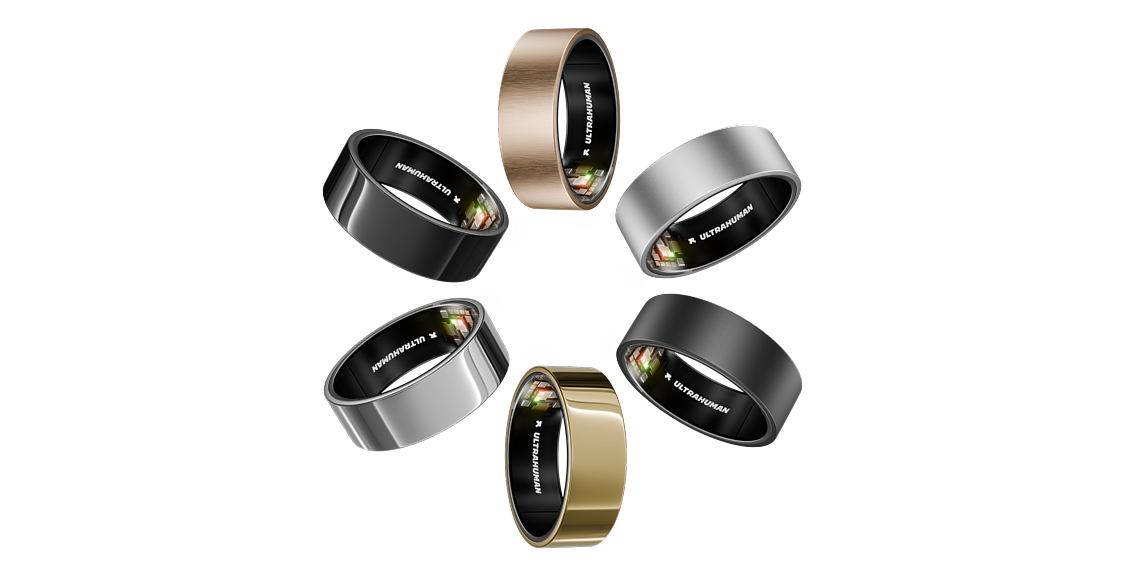
We have a 10% discount code available: HEALZEAL
You can learn more about the Ultrahuman Ring AIR and decide whether it fits your own wellness goals. Visit our Affiliate Partners to learn more.
Disclosure: This post contains an affiliate code/link. If you purchase through my code, Heal & Zeal Digital may receive a commission at no additional cost to you.
The takeaway
You don't need more data just for the sake of having more data. You need information that helps you understand yourself better.
Because sometimes the most useful wellness insight isn't:
"I slept for 7 hours and 23 minutes."
It's:
"I feel better when I prioritise my sleep."
And that's something worth paying attention to.
Hana Feidi
Founder Heal & Zeal Digital